Endometrial Cancer Awareness and Patient Advocacy: Questions That Empower Your Care
September 14, 2026
A cancer diagnosis can make appointments feel rushed, emotional, and overwhelming. Yet endometrial cancer awareness and patient advocacy are not about having every answer. They are about giving yourself permission to pause, ask questions, take notes, request clarification, and understand what comes next.
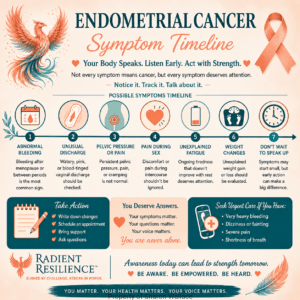
For survivors, fighters, and caregivers, endometrial cancer awareness begins with knowing that unusual vaginal bleeding—especially after menopause—deserves prompt medical attention. When possible, bring a trusted person to appointments to listen, take notes, and help you remember important information.
Most importantly, remember this: Your questions matter, and your voice belongs in every care conversation.
Endometrial Cancer Awareness Begins With Understanding Your Diagnosis
Before making treatment decisions, consider asking your care team:
What type and stage of endometrial cancer do I have?
What did my biopsy, imaging, or pathology report reveal?
What is the grade of my cancer?
Should I meet with a gynecologic oncologist?
Has my tumor received molecular or biomarker testing?
Should I consider genetic counseling or testing, including evaluation for Lynch syndrome?
Would a second opinion help me understand my diagnosis or treatment choices?
Think of your diagnosis as a map. You do not need to memorize every road, but you deserve to understand where you are, what the medical terms mean, and which routes may be available.
Patient Advocacy Through Cancer Care Questions
Treatment for endometrial cancer may involve surgery, radiation therapy, chemotherapy, immunotherapy, hormone therapy, targeted therapy, or a combination of treatments. The recommendations you receive will depend on factors such as the type, stage, grade, and molecular features of the cancer.
Consider asking:
What treatment do you recommend, and why?
What are the possible benefits, risks, and side effects?
Are there other appropriate treatment options?
How could treatment affect my energy, intimacy, fertility, or menopause symptoms?
Are clinical trials available for my diagnosis?
What symptoms or side effects should I report immediately?
Who should I contact after hours if something concerns me?
What support will be available during treatment and recovery?
Write down the answers or ask whether you may record the conversation. If something is unclear, ask your healthcare professional to explain it in another way.
You are not being difficult by asking for clarification. You are participating in your care.
Endometrial Cancer Awareness Means Speaking Up Between Visits
Patient advocacy continues after you leave the doctor’s office. Keep a simple log of symptoms such as bleeding, pain, fatigue, bowel or bladder changes, medication side effects, and emotional well-being.
Share new or worsening symptoms with your healthcare team instead of waiting automatically for the next scheduled appointment. Ask your care team which symptoms require an immediate call and which may safely be discussed during a routine visit.
Caregivers can provide valuable cancer support by:
Keeping a list of questions
Taking notes during appointments
Tracking medications and instructions
Helping organize test results
Providing transportation or emotional support
Encouraging the patient to express her own needs and preferences
Support should strengthen the patient’s voice, not replace it.
Build a Cancer Support Plan That Feels Like You
Healing and recovery include more than medical treatment. Ask whether your cancer center provides access to:
Oncology social workers
Mental-health counseling
Nutrition support
Pelvic-floor rehabilitation
Sexual-health services
Financial navigation
Spiritual-care services
Cancer support groups
Palliative or symptom-management care
Survivorship care planning
Accepting support is not a sign that you are failing. It is one way of protecting your strength for the road ahead.
At Radient Resilience™, we believe strength can look like a journal entry, a quiet prayer, a comfortable tee, a moment of rest, or one brave question asked in a crowded examination room.
Endometrial cancer awareness is more than recognizing a symptom or learning medical terms. It is the steady, courageous practice of listening to your body, honoring your questions, and remaining involved in your care.
Whether you are newly diagnosed, receiving treatment, navigating survivorship, or supporting someone you love, you deserve clear information, compassionate care, and enough room to process each next step in your own way.
“Your voice is part of your strength. Ask the question, honor what you feel, and take each new step with courage—because you are Burned by Challenge. Reborn in Power.”
Save these questions before your next visit, share them with someone you love, and choose one question to ask with confidence today.
Medical Disclaimer
This article is provided for general educational and informational purposes only. It is not intended to diagnose, treat, cure, or prevent any medical condition, and it is not a substitute for personalized medical advice from a qualified healthcare professional. Symptoms, testing needs, treatment options, side effects, and recovery experiences vary from person to person. Always consult your physician or oncology team about questions concerning your health, diagnosis, treatment, medications, or symptoms. Seek prompt medical attention for unusual bleeding, new symptoms, or symptoms that are severe or worsening.