Endometrial cancer awareness begins with something powerful: knowing your body and believing that what you notice matters. Endometrial cancer develops in the lining of the uterus, and recognizing potential cancer symptom1s can help you know when it’s time to talk with a healthcare professional. Your body has a voice and when something feels different, unusual, or simply not right, you deserve to be heard.
Endometrial Cancer Awareness: Know the Symptoms
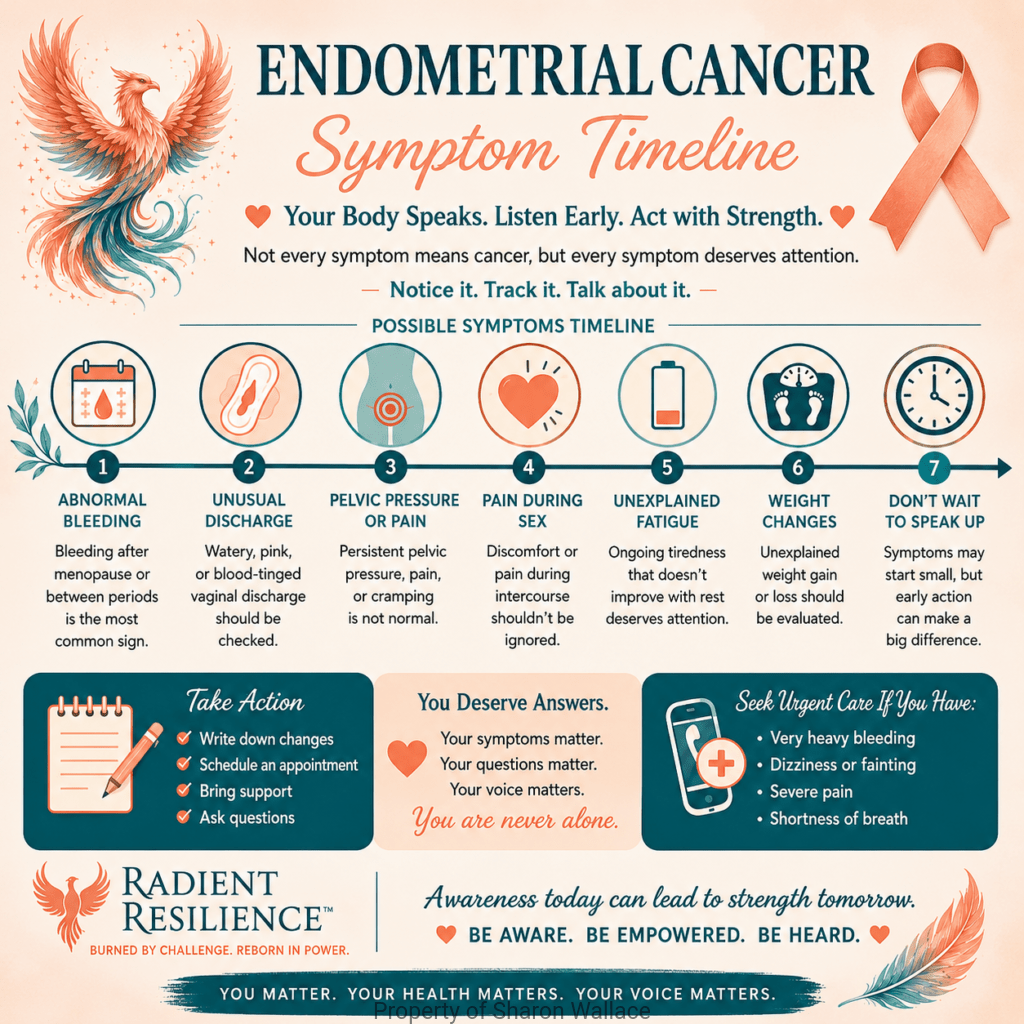
One of the most important warning signs of endometrial cancer is abnormal vaginal bleeding, particularly bleeding or spotting after menopause. Other symptoms that should be discussed with a healthcare professional may include:
- Bleeding between periods or changes in menstrual bleeding
- Vaginal spotting
- Unusual vaginal discharge
- Pelvic pain, pressure, discomfort, or a feeling of fullness
- Pain during sex
- Difficult or painful urination
- Unexplained weight loss
Having one or more of these symptoms does not automatically mean you have cancer. Many noncancerous conditions can cause similar symptoms.
But here’s the important part: you don’t have to diagnose yourself before you’re allowed to ask questions.
If something has changed, say something. Women’s health should never depend on how good we become at ignoring our own bodies.
Why Cancer Symptoms and Early Detection Matter
Think of a new or unusual symptom like a warning light on your car’s dashboard. The light doesn’t tell you exactly what’s wrong and it certainly doesn’t mean the engine is doomed. It simply says, “Hey, this deserves some attention.”
Your body deserves the same courtesy.
Endometrial cancer is often discovered because it produces symptoms such as abnormal vaginal bleeding. Unlike some cancers, there is currently no routine screening test recommended for people at average risk who don’t have symptoms. That’s one reason recognizing changes and reporting them promptly is so important.
When symptoms need further evaluation, a healthcare professional may recommend an examination, transvaginal ultrasound, endometrial biopsy, or other testing based on your individual circumstances.
And one important reminder: a Pap test is not a screening test for endometrial cancer.2 Don’t assume a normal Pap test means unusual uterine bleeding or other symptoms should be ignored.
Cancer Symptoms: A Practical Plan for Patients and Caregivers
When something changes, fear can make it tempting to wait and see. Instead of letting worry run the meeting, and let’s face it, worry loves scheduling unnecessary meetings, turn your concern into action.
Start here:
- Write it down. Track changes in bleeding, spotting, discharge, pelvic discomfort, pain, and other symptoms.
- Schedule an appointment. Abnormal bleeding should be evaluated, and bleeding after menopause should always be reported to a healthcare professional.
- Bring someone with you. A caregiver, friend, family member, or advocate can provide emotional support, take notes, and help you remember questions.
- Ask direct questions. Ask what could be causing your symptoms, what tests may be appropriate, when results will be available, and what happens next.
- Keep asking when something doesn’t feel right. You are allowed to advocate for yourself and seek clarification about your care.
Being proactive isn’t being dramatic.
It’s being informed. It’s being courageous. It’s taking your health seriously.
Supporting Women’s Health Beyond Diagnosis
Endometrial cancer awareness doesn’t end when treatment ends.
For survivors, a new symptom can awaken fears you thought you had finally tucked away. That’s understandable. Instead of carrying that worry alone, contact your healthcare or oncology team about new, persistent, or concerning symptoms.
Caregivers have an important role here, too. Sometimes the greatest support isn’t finding the perfect words or trying to fix the fear. It’s listening without judgment, helping keep track of appointments and questions, and reminding the person you love that speaking up about their health is never an inconvenience.
Awareness gives us knowledge.
Support gives us courage.
And together, they give us another reason to hope.
Your Symptoms Matter. Your Voice Matters.
At Radient Resilience™, we believe education is part of empowerment. Knowing the possible signs of endometrial cancer doesn’t mean living in fear of every ache or change. It means knowing when your body may be asking for attention—and giving yourself permission to respond.
If you’ve noticed abnormal bleeding, unusual discharge, persistent pelvic discomfort, or another concerning change, talk with a qualified healthcare professional.
And if someone you love keeps saying, “I’ll make the appointment later,” this might be the gentle nudge they need.
Share this information. Start the conversation. Encourage someone to make the appointment they’ve been postponing.
Because awareness isn’t about fear.
It’s about giving ourselves the knowledge and courage to act.
“Listen when your body whispers. Speak when something changes. Your voice is part of your strength.” — Radient Resilience™
Medical Information Disclaimer
The information provided by Radient Resilience™ is intended for educational and informational purposes only and should not be considered medical advice, diagnosis, or treatment. It is not a substitute for professional care from a qualified healthcare provider.
Cancer symptoms, diagnoses, treatments, and individual health needs can vary. Always consult your physician, oncology team, or another qualified healthcare professional with questions or concerns about your health, symptoms, medications, or treatment options. Never delay seeking professional medical care because of information you have read on this website.
If you believe you are experiencing a medical emergency, seek immediate medical attention or contact emergency services in your area.
Radient Resilience™ encourages you to stay informed, ask questions, advocate for your health, and work with your healthcare team when making medical decisions.
Knowledge can empower you, but your healthcare team should guide your care.
“Your voice has power. Your questions have value. And advocating for your health is an act of courage.” — Radient Resilience™